
Effective Facilitation: Bridging the Gap between Learning and Application
An Article by Joey Ng
1ST August 2014
1ST August 2014
You only have time to attend either one of these two concurrent talks during a
seminar on Leadership:
seminar on Leadership:
Option 1 – A Harvard Business School professor who has been teaching leadership for more
than thirty years sharing his knowledge to more than 20,000 students throughout his career. His
profile headline reads ‘Always at the pulse of the latest leadership theories’.
Option 2 – An entrepreneur who in a span of fifteen years, expand his organisation from a two man
team to 20,000 strong today. His profile headline reads ‘Fifteen years of real time leading’.
Which one would you attend? Truth be told, Option 2 sounds more inspiring and realistic. However, lets take a further look into how we can better understand the title as it suggests.
Conceptual Tools - Models, Frameworks and Theories

Facilitators use conceptual tools such as conceptual models, decision making frameworks and behavioral theories to explain the psychological and scientific aspect of behaviors to participant in an easy to understand manner. In the context of Klob’s four-stage experiential learning cycle, conceptual tools are used by facilitators in the third stage, abstract conceptualization, as a way to connect various learning points to summarizes the debrief. Facilitators should equipped themselves with sound knowledge in a wide range of conceptual tools, to help participants understand how their thinking and actions lead to certain outcomes and also, to explain cause-and-effect events. The basic idea behind the use of conceptual tools as part of debriefing is that by explaining complex events in relatively straightforward cause-and-effect relationships, it increases the likelihood of participants making positive changes, because they now know what they have to do, in order to achieve the outcome they seek.
Besides being used as part of the debriefing process, conceptual tools are used by many to:
1. Guide decision making.
2. Make predictions
3. Systematic review and analysis of behaviors.
4. Offer scientific and rational explanations to events.
5. Simplifies a complex situation.
6. Organize multiple variables in a coherent manner.
1. Guide decision making.
2. Make predictions
3. Systematic review and analysis of behaviors.
4. Offer scientific and rational explanations to events.
5. Simplifies a complex situation.
6. Organize multiple variables in a coherent manner.
However, in reality, outside of a a controlled environment, relying on conceptual tools a alone to understand the real world is not enough. Conceptual tools are after all, merely concepts and broad representation of ideas about human dynamics and their main purpose is to offer the simplest explanation to events and occurrences. But as we all know, the real world is more complex than 4 stages of team p performances or 4 types of behaviors. When the rubber meets the road, reality will present challenges that no theories, models and frameworks can fully explain.
Facilitators must be aware of the limitations of conceptual tools. They need t to recognize that the linear idea of cause-and-effect seldom applies in reality and that framework offers rational explanation to behaviors, but h humans are highly prone to irrational thinking. It is not that conceptual tools are not important, it is that conceptual tools alone are insufficient.
When the Rubber Meets the Road

A whitepaper published by The Center of Creative Leadership sug gested the following ratio on how leadership is developed -70% of o one’s leadership skill is acquired through actual experiences, 20%
through feedback and observation, and 10% institutionally.
Educating oneself about leadership is an important part of leadership development. It enables leaders to learn from others and reflect on their own leadership skill. However, a large proportion of leadership learning comes when leaders apply and ‘do’ leadership, not just read d or talk about it. When the rubber meets the r road, leaders will experience leadership challenge es that no formal training and education will e ever teach them. Leading real people and real projects exposes leaders to variables that conceptual models and frameworks tend to over-simplify, overlook and/or understate. Models and frameworks are
deliberately kept simple so that it can be easily understood by most, and this indivertibly resulted in a gap between theory and application. Variables leaders will find themselves dealing includes time, performance standards, human emotions, personality difference es, up and down stream pressure and the list goes on. These are just factors internal to the team; we have not touch on variables that are outside of leaders’ sphere of influence, such as government policies and technology advancement. While frameworks are available to help leaders manage each variable as a standalone entity, there are no conceptual tools available to manage a collective system of variables, because the interlinked relationships between the variables are too complex to rationalize into structures. As such, the best way for leaders to learn how to lead in the real world is by actual experimentation, by ‘doing’ leadership. The more they ‘do’ leadership, the better they are at dealing with
complexity.
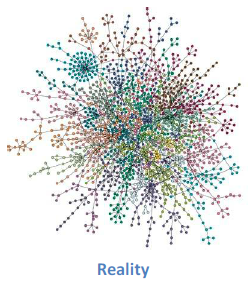
Leading real projects means leaders have to deal with the complexity of economics (money, time, asset etc), human factors (greed, incompetency, unmotivated etc) and legal/ethical challenges (policies, moral compass, etc). This means dealing with outcomes that have real consequences on the team. Examples of real consequences include losing money, upsetting people and getting sued. Without real consequences, leaders will never be able to assess the actual impact their decision and actions have on others and the team. It is hard-pressed to think of any other type of feedback that is as forthright as real consequences.
Relating this back to conceptual tools, without actual application of the tools and benefiting (or suffering) from the ensuing consequences, leaders will never be able to fully understand and appreciate the usefulness (or uselessness) of the conceptual tools they learned.
Discerning Participants
Facilitators must be conscious of the fact that participants themselves have lived through their fair share of real time leadership and teamwork. It can even be argued that most participants experienced more leadership and teamwork than facilitators. Participants are ‘doer’ of leadership and teamwork. To them, leadership and teamwork are more about application and practice than concepts and theories. Conceptual models sound just about right on paper but what really matters to participants is when the rubber meets the road, how do we apply them effectively?
Hence, for the facilitation to be relevant and useful to the participants, facilitators must be able to draw out practical features and uses of the conceptual tools. In-order to do so effectively, facilitators themselves must have experiences with the tools in actual situations. Without real time application, facilitators would find it difficult to bridge concept and reality in meaningful ways, leaving them to present the conceptual tools at the theoretical level and suggesting application approaches without considering the challenges participants face in reality. This raises questions on the effectiveness of the facilitation because it is no different from participants reading the models directly from textbooks.
Content Neutrality
To be clear, facilitators do not teach participants how to be a more effective leader or team member. This is a job for trainers, educators and consultants. In the purest sense, facilitators are supposed to be process experts but content neutral. Process experts means that facilitators are skilled and proficient in facilitation principles, methods and conceptual tools. In the context of adventure learning, this also means the activities. Using information such as participant profiles, programme objective and deliverable, facilitators would pick the most suitable processes and design the experience around them.
Content neutrality means that facilitators do not take any positions, advocate for any particular causes nor contribute any content to the discussion. It is easier for facilitators to practice content neutrality in the context of process facilitation than adventure learning due to the nature of post activity debrief, where facilitators are often required to make clear the key learning points of each activity or direct the debrief towards a particular learning outcome. Nonetheless, the main idea of not teaching remains the same in any form of facilitation.
Content neutrality does not mean zero content knowledge. The difference is huge. Zero content knowledge means that facilitators are absolutely clueless about what is being said and discussed. While this will surely ensure content neutrality, it also means that facilitators have no idea if the discussion is moving towards the right direction or it is of any real value to the participants. While facilitators do not contribute to the content, content knowledge remains a key asset because it enables facilitators to be more effective. Facilitators uses their content knowledge to guide the participants towards more meaningful conversations, by asking participants the right questions, surface underlying assumptions and connecting different perspectives. And real-time leadership experience is the content, when the learning outcomes revolve around leadership and team dynamics.
Connecting the Dots
Suppose you have a third option -A Harvard Business School Professor who taught Leadership for fifteen years and is also an entrepreneur with fifteen years of experience leading and building an actual organization.
Would you choose him over the first two options? Many would.
Putting all the key points together, it is hard to dispute with the idea that facilitators are more effective when they have actual experiences with conceptual tools, because it gives them a better sense of reality, and thus, enabling them to draw on more practical and sensible application of the models.
To gain in-depth understanding and knowledge of conceptual tools, facilitators have to read, reflect on what they’ve read and analyze their reading by writing articles. There is no short cut to this. Top facilitators read to get to the top, and top facilitators read to stay at the top. Reflecting and writing on conceptual tools contributes massively to the learning process. Writing reviews and articles ensures a thorough understanding of the conceptual tools learned because it requires the facilitators to analyze the content, identify the key learning points, put them together in a coherent fashion and present their perspectives in a manner that is different from the original content, without losing the main essence. In short, writing increases the
breadth and depth of understanding.
As repeated many times here, understanding the tools at the conceptual level is not enough, no matter how in-depth one’s knowledge is. Understanding must be accompanied by real-time application, in order for facilitators to apply the tools effectively. Facilitators can claim to understand the practical aspects of conceptual tools very well because they have practiced them with thousand of participants represented by hundreds of organization. However, are the practices limited to team-based activities in an artificial, controlled environment? Where succeed or fail, it does not make any difference at all? By now, you should get the point.
To gain real-time experiences on conceptual tools, facilitators have to put themselves in actual leadership and management positions. Some facilitators are fortunate enough to lead an organization or two, others will be given opportunities to lead departments, while there will always be ad-hoc projects for the rest to lead. Wherever we are, there is surely someone or something waiting to be led. In short, the opportunities to lead are endless. This bias towards real time leadership experience, instead of merely experience as a team-member, is deliberate because the leadership position allows facilitators to relate to the tools at a higher level, which also translates to a more holistic analysis of the conceptual tools. Facilitators need not necessarily apply the conceptual tools consciously during their decision-making process, in other words, design their thought-process around a particular framework. Facilitators can also learn the practical aspects of the tools by reflecting their past experiences on the concepts.
There are many ways to learn the practical aspects of conceptual tools, but the one element that must always be present is real-time experiences.
Would it be a conflict of interest, for facilitators to both pursue deep knowledge in conceptual tools and take on real-time leadership responsibilities at the same time? The answer is categorically no. Instead of conflicting, they are as complementary as it can get. Do facilitators have enough time to do both? The answer is categorically yes. In fact, by doing both, it actually steepened the facilitators’ learning curve because they are learning in a more effective manner. Facilitators have to keep themselves abreast of the latest management and behavioral science thinking and so, they read to gain new knowledge. These conceptual tools require a context to ‘test’ their feasibility and this is where the facilitators’ leadership role comes in. As leaders themselves, facilitators should always be on the lookout for ways to develop their leadership and management skills. This is where the readings of conceptual models come in. Together, reading and application feeds each other to create a self-reinforcing loop.
The effectiveness of an adventure learning programme is determined not by the sum of learning points generated on the spot or the amount of talk that takes place, but by the amount of application that happened after or action taken. Effective facilitation therefore is measured by how well facilitators bridge the gap between learning and application or talk and action.
through feedback and observation, and 10% institutionally.
Educating oneself about leadership is an important part of leadership development. It enables leaders to learn from others and reflect on their own leadership skill. However, a large proportion of leadership learning comes when leaders apply and ‘do’ leadership, not just read d or talk about it. When the rubber meets the r road, leaders will experience leadership challenge es that no formal training and education will e ever teach them. Leading real people and real projects exposes leaders to variables that conceptual models and frameworks tend to over-simplify, overlook and/or understate. Models and frameworks are
deliberately kept simple so that it can be easily understood by most, and this indivertibly resulted in a gap between theory and application. Variables leaders will find themselves dealing includes time, performance standards, human emotions, personality difference es, up and down stream pressure and the list goes on. These are just factors internal to the team; we have not touch on variables that are outside of leaders’ sphere of influence, such as government policies and technology advancement. While frameworks are available to help leaders manage each variable as a standalone entity, there are no conceptual tools available to manage a collective system of variables, because the interlinked relationships between the variables are too complex to rationalize into structures. As such, the best way for leaders to learn how to lead in the real world is by actual experimentation, by ‘doing’ leadership. The more they ‘do’ leadership, the better they are at dealing with
complexity.
Leading real projects means leaders have to deal with the complexity of economics (money, time, asset etc), human factors (greed, incompetency, unmotivated etc) and legal/ethical challenges (policies, moral compass, etc). This means dealing with outcomes that have real consequences on the team. Examples of real consequences include losing money, upsetting people and getting sued. Without real consequences, leaders will never be able to assess the actual impact their decision and actions have on others and the team. It is hard-pressed to think of any other type of feedback that is as forthright as real consequences.
Relating this back to conceptual tools, without actual application of the tools and benefiting (or suffering) from the ensuing consequences, leaders will never be able to fully understand and appreciate the usefulness (or uselessness) of the conceptual tools they learned.
Discerning Participants
Facilitators must be conscious of the fact that participants themselves have lived through their fair share of real time leadership and teamwork. It can even be argued that most participants experienced more leadership and teamwork than facilitators. Participants are ‘doer’ of leadership and teamwork. To them, leadership and teamwork are more about application and practice than concepts and theories. Conceptual models sound just about right on paper but what really matters to participants is when the rubber meets the road, how do we apply them effectively?
Hence, for the facilitation to be relevant and useful to the participants, facilitators must be able to draw out practical features and uses of the conceptual tools. In-order to do so effectively, facilitators themselves must have experiences with the tools in actual situations. Without real time application, facilitators would find it difficult to bridge concept and reality in meaningful ways, leaving them to present the conceptual tools at the theoretical level and suggesting application approaches without considering the challenges participants face in reality. This raises questions on the effectiveness of the facilitation because it is no different from participants reading the models directly from textbooks.
Content Neutrality
To be clear, facilitators do not teach participants how to be a more effective leader or team member. This is a job for trainers, educators and consultants. In the purest sense, facilitators are supposed to be process experts but content neutral. Process experts means that facilitators are skilled and proficient in facilitation principles, methods and conceptual tools. In the context of adventure learning, this also means the activities. Using information such as participant profiles, programme objective and deliverable, facilitators would pick the most suitable processes and design the experience around them.
Content neutrality means that facilitators do not take any positions, advocate for any particular causes nor contribute any content to the discussion. It is easier for facilitators to practice content neutrality in the context of process facilitation than adventure learning due to the nature of post activity debrief, where facilitators are often required to make clear the key learning points of each activity or direct the debrief towards a particular learning outcome. Nonetheless, the main idea of not teaching remains the same in any form of facilitation.
Content neutrality does not mean zero content knowledge. The difference is huge. Zero content knowledge means that facilitators are absolutely clueless about what is being said and discussed. While this will surely ensure content neutrality, it also means that facilitators have no idea if the discussion is moving towards the right direction or it is of any real value to the participants. While facilitators do not contribute to the content, content knowledge remains a key asset because it enables facilitators to be more effective. Facilitators uses their content knowledge to guide the participants towards more meaningful conversations, by asking participants the right questions, surface underlying assumptions and connecting different perspectives. And real-time leadership experience is the content, when the learning outcomes revolve around leadership and team dynamics.
Connecting the Dots
Suppose you have a third option -A Harvard Business School Professor who taught Leadership for fifteen years and is also an entrepreneur with fifteen years of experience leading and building an actual organization.
Would you choose him over the first two options? Many would.
Putting all the key points together, it is hard to dispute with the idea that facilitators are more effective when they have actual experiences with conceptual tools, because it gives them a better sense of reality, and thus, enabling them to draw on more practical and sensible application of the models.
To gain in-depth understanding and knowledge of conceptual tools, facilitators have to read, reflect on what they’ve read and analyze their reading by writing articles. There is no short cut to this. Top facilitators read to get to the top, and top facilitators read to stay at the top. Reflecting and writing on conceptual tools contributes massively to the learning process. Writing reviews and articles ensures a thorough understanding of the conceptual tools learned because it requires the facilitators to analyze the content, identify the key learning points, put them together in a coherent fashion and present their perspectives in a manner that is different from the original content, without losing the main essence. In short, writing increases the
breadth and depth of understanding.
As repeated many times here, understanding the tools at the conceptual level is not enough, no matter how in-depth one’s knowledge is. Understanding must be accompanied by real-time application, in order for facilitators to apply the tools effectively. Facilitators can claim to understand the practical aspects of conceptual tools very well because they have practiced them with thousand of participants represented by hundreds of organization. However, are the practices limited to team-based activities in an artificial, controlled environment? Where succeed or fail, it does not make any difference at all? By now, you should get the point.
To gain real-time experiences on conceptual tools, facilitators have to put themselves in actual leadership and management positions. Some facilitators are fortunate enough to lead an organization or two, others will be given opportunities to lead departments, while there will always be ad-hoc projects for the rest to lead. Wherever we are, there is surely someone or something waiting to be led. In short, the opportunities to lead are endless. This bias towards real time leadership experience, instead of merely experience as a team-member, is deliberate because the leadership position allows facilitators to relate to the tools at a higher level, which also translates to a more holistic analysis of the conceptual tools. Facilitators need not necessarily apply the conceptual tools consciously during their decision-making process, in other words, design their thought-process around a particular framework. Facilitators can also learn the practical aspects of the tools by reflecting their past experiences on the concepts.
There are many ways to learn the practical aspects of conceptual tools, but the one element that must always be present is real-time experiences.
Would it be a conflict of interest, for facilitators to both pursue deep knowledge in conceptual tools and take on real-time leadership responsibilities at the same time? The answer is categorically no. Instead of conflicting, they are as complementary as it can get. Do facilitators have enough time to do both? The answer is categorically yes. In fact, by doing both, it actually steepened the facilitators’ learning curve because they are learning in a more effective manner. Facilitators have to keep themselves abreast of the latest management and behavioral science thinking and so, they read to gain new knowledge. These conceptual tools require a context to ‘test’ their feasibility and this is where the facilitators’ leadership role comes in. As leaders themselves, facilitators should always be on the lookout for ways to develop their leadership and management skills. This is where the readings of conceptual models come in. Together, reading and application feeds each other to create a self-reinforcing loop.
The effectiveness of an adventure learning programme is determined not by the sum of learning points generated on the spot or the amount of talk that takes place, but by the amount of application that happened after or action taken. Effective facilitation therefore is measured by how well facilitators bridge the gap between learning and application or talk and action.
